Beyond the Cauldron: Sustainable Witchcraft and the Art of Slow Magic
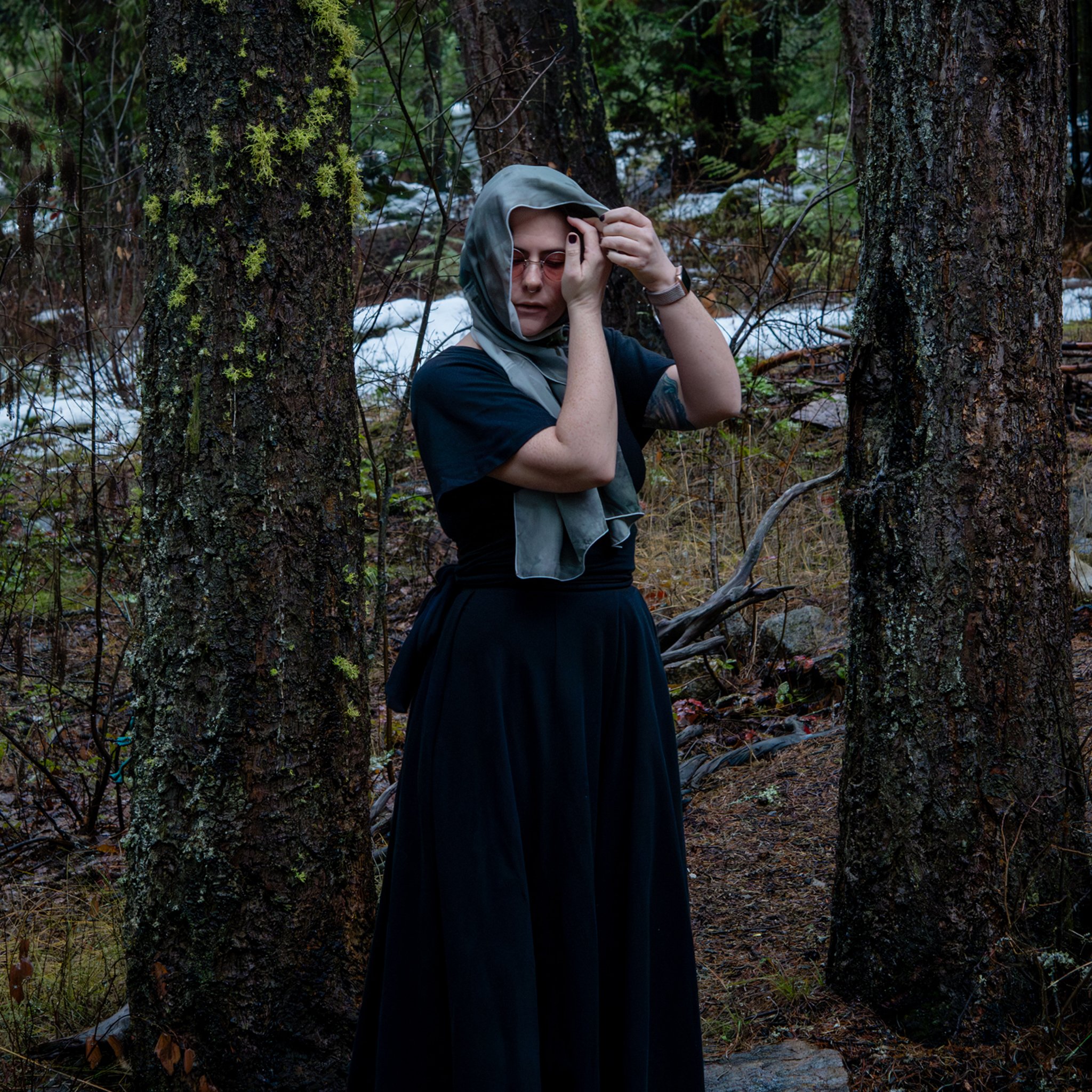
In a world dominated by fast fashion and instant online hauls, it is easy to forget that both our wardrobes and our spiritual paths can be built on what we already have. For those of us practicing sustainable witchcraft in British Columbia, the shift toward slow magic is a natural extension of an eco-conscious life. Whether you’re foraging in the Kootenay forest or upcycling everyday items into sacred tools, true magic—much like sustainable fashion—is about intention rather than acquisition. In this guest post, Tua Broom of Coven Mail Club explores how to strip away the consumerism of “WitchTok" and return to a more resourceful, earth-based practice right here in the West Kootenays.
Sustainable Witchcraft: Making Magic Without More Consumption
When I started my witchcraft journey 25 years ago, there were no online warehouses where you could type in any occult item you could dream up into a search bar, pay for it with a credit card, and have it show up at your house the next day.
In 2001, online shopping was still a bit of a novelty—and not one that people trusted in the way we do now. Metaphysical shops were also hard to come by. At least where I grew up, there was only one that I knew of, and it sat directly across the street from a Christian book shop, which I found deeply hilarious, even then.
Mostly, if you wanted witchcraft supplies, you had to get resourceful. In the backs of the few metaphysical magazines and books I could get my hands on as a teen, there were often little mail-order addresses where you could send away with a self-addressed stamped envelope and receive catalogues, pamphlets, and all sorts of mysterious things in the mail weeks later. I never actually wrote to any of them myself—I was a closet witch for much longer than I care to admit, and absolutely terrified of my parents finding out—but I do sometimes miss that slower version of wanting.
Because wanting used to require patience.
Returning to Your Roots: Magic Without the Price Tag
Now, in the age of online shopping and WitchTok, it is painfully easy to get swept up in the need for the next shiny crystal, a bigger cauldron, seventeen tarot decks (yes, I am pointing my finger directly back at myself here), and somewhere in all of that, we forget that witchcraft at its root is an earth-based practice. It asks us to work with what is around us.
A design scratched into bare earth with a stick becomes a protection sigil.
A special place in your yard where you leave offerings becomes sacred space.
Any old notebook becomes a grimoire.
A cinnamon stick from your kitchen becomes part of an abundance spell.
Truly, to be a witch, you do not need much at all.
Which might sound like a strange thing to hear from someone who owns a small business selling witchcraft goods.
Fair. 😂
But my point is not that ritual tools are bad, or that beautiful spiritual objects do not have value. My point is that a sustainable witchcraft practice begins by remembering that the object itself is not where the magic lives.
The magic lives in the relationship.
In the intention.
In the repeated return.
And if you are going to purchase tools for your practice, I think there is something deeply aligned about choosing pieces made by human hands instead of feeding more money into giant corporations that have figured out how to mass-produce spirituality and sell it back to us with the promise of free shipping over $49.
Supporting Local Magic in the West Kootenays
Support your local metaphysical shop. Go to the weird little witch market. Buy from the herbalist making bundles in her kitchen and the artist hand-pouring ritual candles at their dining room table.
Not just because it is more sustainable in the obvious environmental sense—though that matters too—but because there is an energy to handmade things. A thoughtfulness. A lineage of care.
They arrive with a story.
Coven Mail Club: A Slower Way to Connect
And maybe this yearning for slower, more intentional magic is exactly what drove me to create Coven Mail Club in the first place. I wanted to return to that old feeling of waiting for something meaningful to arrive. Not an impulse purchase tossed in a box by a warehouse worker three provinces away, but a ritual. A pause. Something to open slowly. By sending a new dispatch each New Moon, my little mail coven and I fall into a rhythm together—a cycle of returning, reflecting, making space, and beginning again.
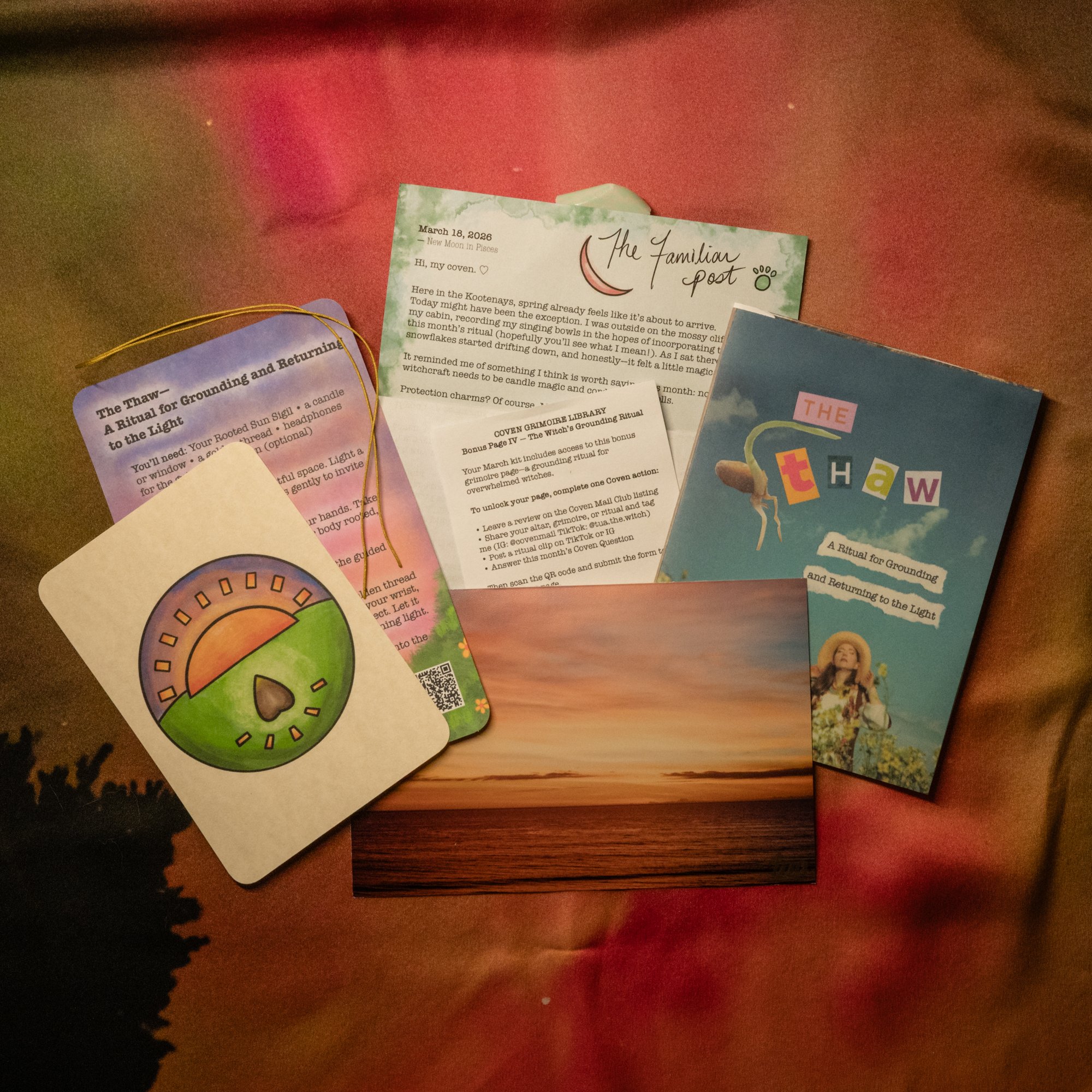
Everything I create for my shop is made by hand to order or in small batches here in my cabin in the woods, because I want witchcraft to feel accessible, personal, and rooted in real life again—not like one more aesthetic for people to feel pressured to spend money keeping up with.
Because sustainable witchcraft is not really about buying less just for the sake of buying less.
It is about consuming more consciously.
Choosing tools with intention.
Returning to them often.
Finding magic in what you already have.
And remembering that the most powerful parts of this practice will never be available with one-click shipping.
Meet the Author
Tua Broom is the witch behind Coven Mail Club, a monthly New Moon ritual subscription built around slow magic, snail mail, and handmade spiritual practice. After more than 25 years of studying and practicing witchcraft, she now spends her days designing witchcraft zines, stirring flower petals into prayer beads, and convincing people they do not, in fact, need seventeen tarot decks to be a real witch. They live and create from a home studio in the woods of rural British Columbia with their husband and two highly opinionated cat familiars.